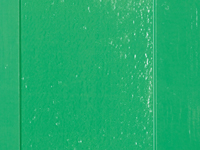
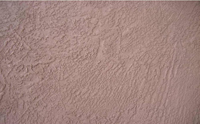
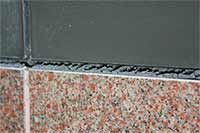
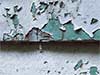
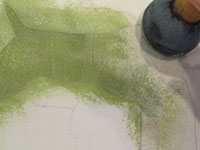
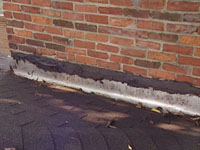
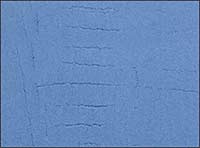
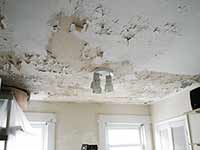
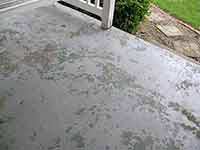
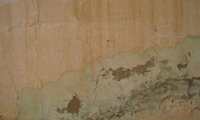
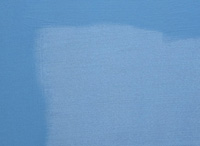
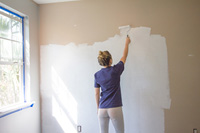
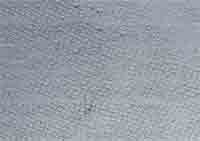
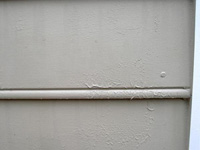
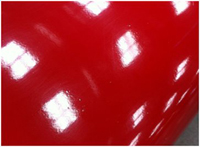
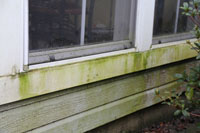
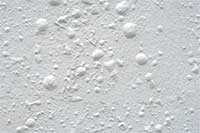
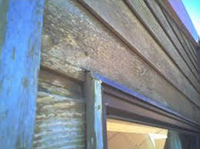
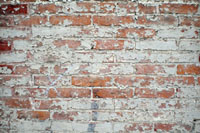
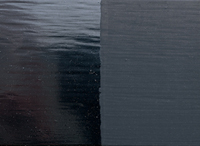
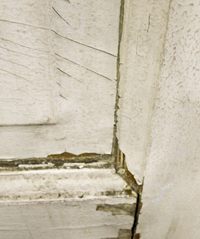
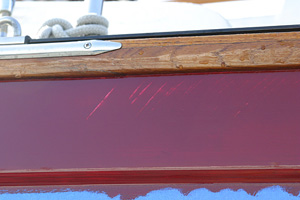
 CAUSES: Lap marks sometimes occur where wet and dry layers overlap during application of paint or stain. This non-uniform appearance can be caused by a number of situations: working too long in one area when painting, too much heat or draft during application, too porous a surface or the use of an improper thinner. Too much heat or draft causes a rapid loss of solvent and speeds up the set up time, resulting in a thicker film wherever overlapping occurs.
SOLUTIONS: Another coat of paint, spread uniformly, is necessary to block out lap marks. If the finish coat is relatively transparent or the surface overly porous, a second coat or a primer coat should be applied.
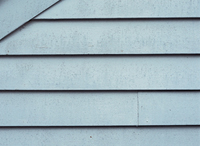
To avoid lap marks, don’t paint one section of a building from top to bottom completely. Instead, paint in small sections so there is not time for one to dry completely before starting in on the adjacent one. However, top to bottom painting is appropriate on siding shingle surfaces since they provide natural breaking points.
Low luster exterior paints that are highly pigmented require special application techniques. Unless a wet edge is maintained, brushing back into a semi-dry area will double the coat and result in “shiners” in these places. Work in limited areas to maintain a wet edge, even if it means doing one board at a time.
Painting on hot, windy days speeds up drying time; avoid painting then. Add thinner sparingly if it is needed.